MERCHANT ONBOARDING
Simplifying and Unifying Merchant Onboarding
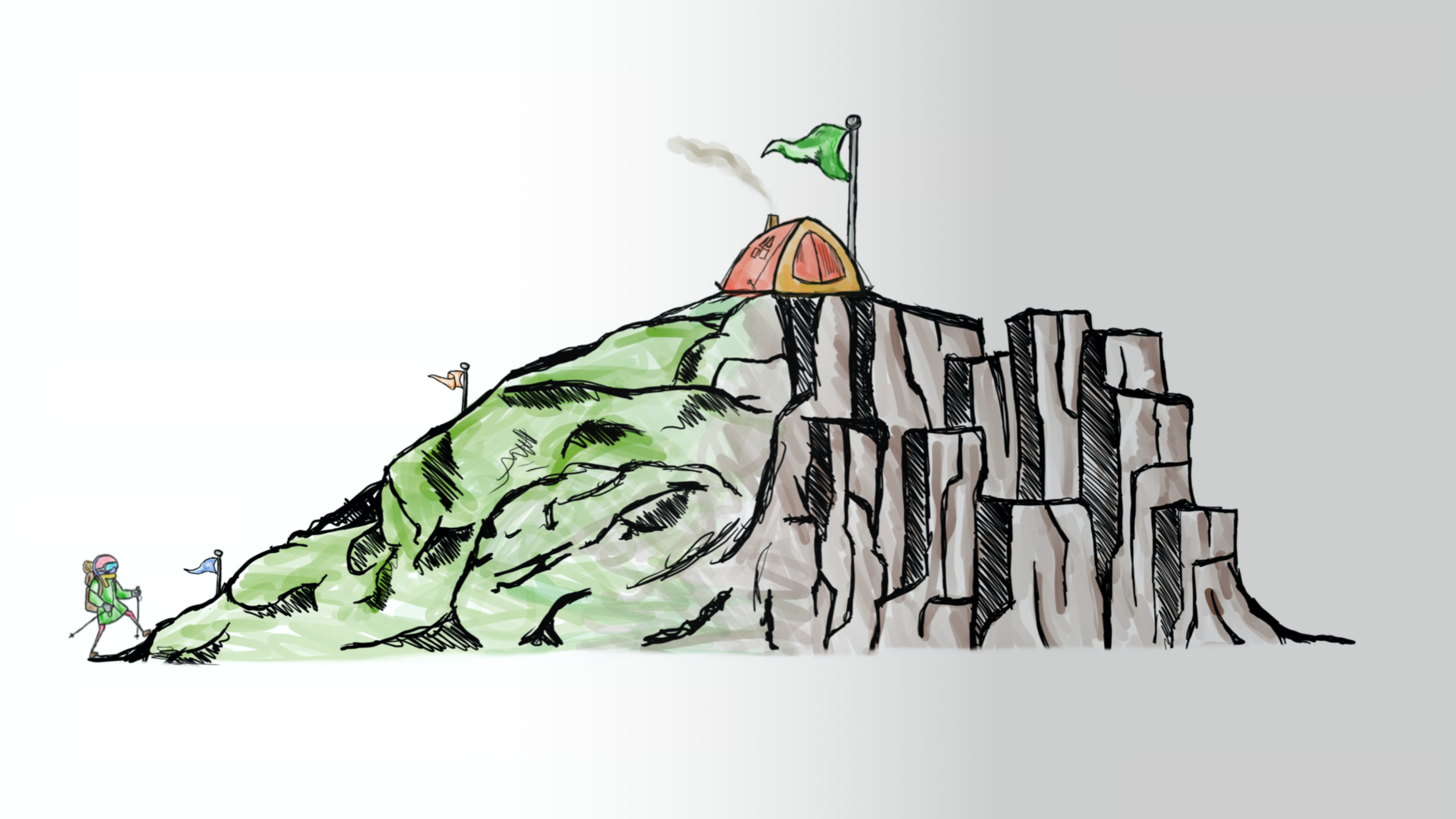
Merchant onboarding was fragmented across products and regions. Sellers went through separate flows for sign-up, verification, and setup — often repeating information and unclear on what came next. As PayPal expanded globally, we needed to bring account creation, compliance, and activation into one connected system.
Role & Scope
I led design strategy for merchant onboarding, partnering closely with Product, Engineering, and Compliance to unify sign-up, verification, and activation into a scalable framework. My focus was to define the end-to-end structure and created patterns that work across products and markets without adding friction.
Strategy
The goal was to turn onboarding into a connected system rather than a series of isolated steps.
We focused on simplifying the structure, reducing repeated data collection, and designing for progressive disclosure — asking for the right information at the right time without overwhelming sellers.
The framework also needed to scale. That meant creating patterns that could support different regions, compliance requirements, and product entry points without fragmenting the experience again.
Key challenges
Balancing simplicity with regulatory requirements
Removing duplication across fragmented flows
Supporting global expansion
Designing patterns that scale
Driving activation beyond sign-up

Collecting only what we need to help a merchant get their job done.
Guiding Principles
Because onboarding spans multiple products and regions, we defined a shared set of principles to guide decisions across teams.
Design onboarding as one platform, not disconnected flows
Merchants should experience PayPal as a unified system from the start.
Reduce friction without sacrificing compliance
Collect the right information at the right time, with progressive disclosure instead of overload.
Treat onboarding as ongoing, not a single step
Activation doesn’t end at sign-up. The framework extends into setup and early usage.
Design for scale
Patterns need to support multiple products, regions, and future experimentation without fragmenting again.
Redefining Onboarding
Onboarding had been split across sign-up, verification, and setup, often owned by different teams.
We brought it into one connected flow built around steady progress. Instead of front-loading every requirement, we staged data collection, asking for what’s relevant at each step and carrying information forward across products.
The result was less repetition and a clearer sense of momentum.

Verification & Compliance
Compliance requirements differed across regions and products.
We built a flexible verification layer that surfaces requirements contextually, asking for documentation only when necessary and preserving a consistent experience across markets.

Onboarding to Activation
Sign-up isn’t the finish line.
To support activation, we introduced PayPal Assistant as a guided layer within onboarding. Instead of dropping merchants into a dashboard, the Assistant surfaces clear next steps based on their progress — helping them complete setup, connect products, and move toward first transaction.
This shifts onboarding from a checklist to a guided experience, making activation feel intentional rather than self-directed.

FTUX PayPal Assistant
Merchant Lifecycle
We designed this framework to extend beyond account creation and into continued product adoption, supporting additional setup and verification as merchants expand without resetting progress.
PayPal Assistant extends this guidance over time, surfacing relevant next steps as merchants grow. The result is a continuous experience rather than a single onboarding event.
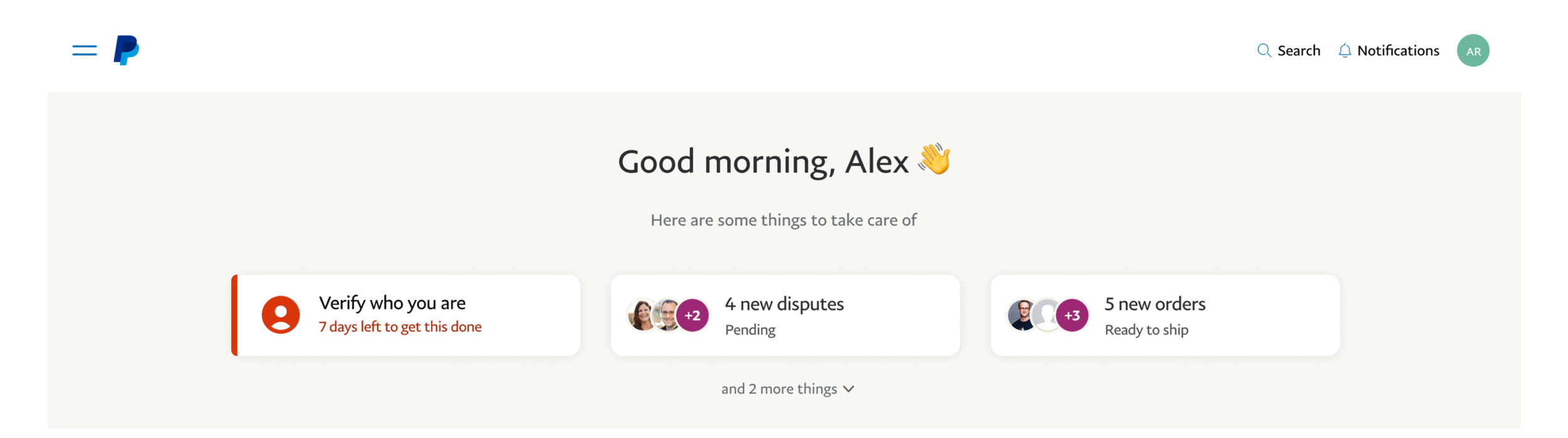
PayPal Assistant ongoing state
Results
Onboarding completion improved, and merchants reached activation milestones sooner.
Staged data collection reduced early drop-off, and PayPal Assistant increased progress through key setup steps. The unified framework now supports global expansion without fragmenting the experience again.
Scaling & Next Steps
With the framework in place, the focus shifted to refining regional variations, expanding product entry points, and evolving the Assistant to support deeper lifecycle guidance.