SQUARE ONLINE REPRICING
Repricing Square Online to Better Reflect Value
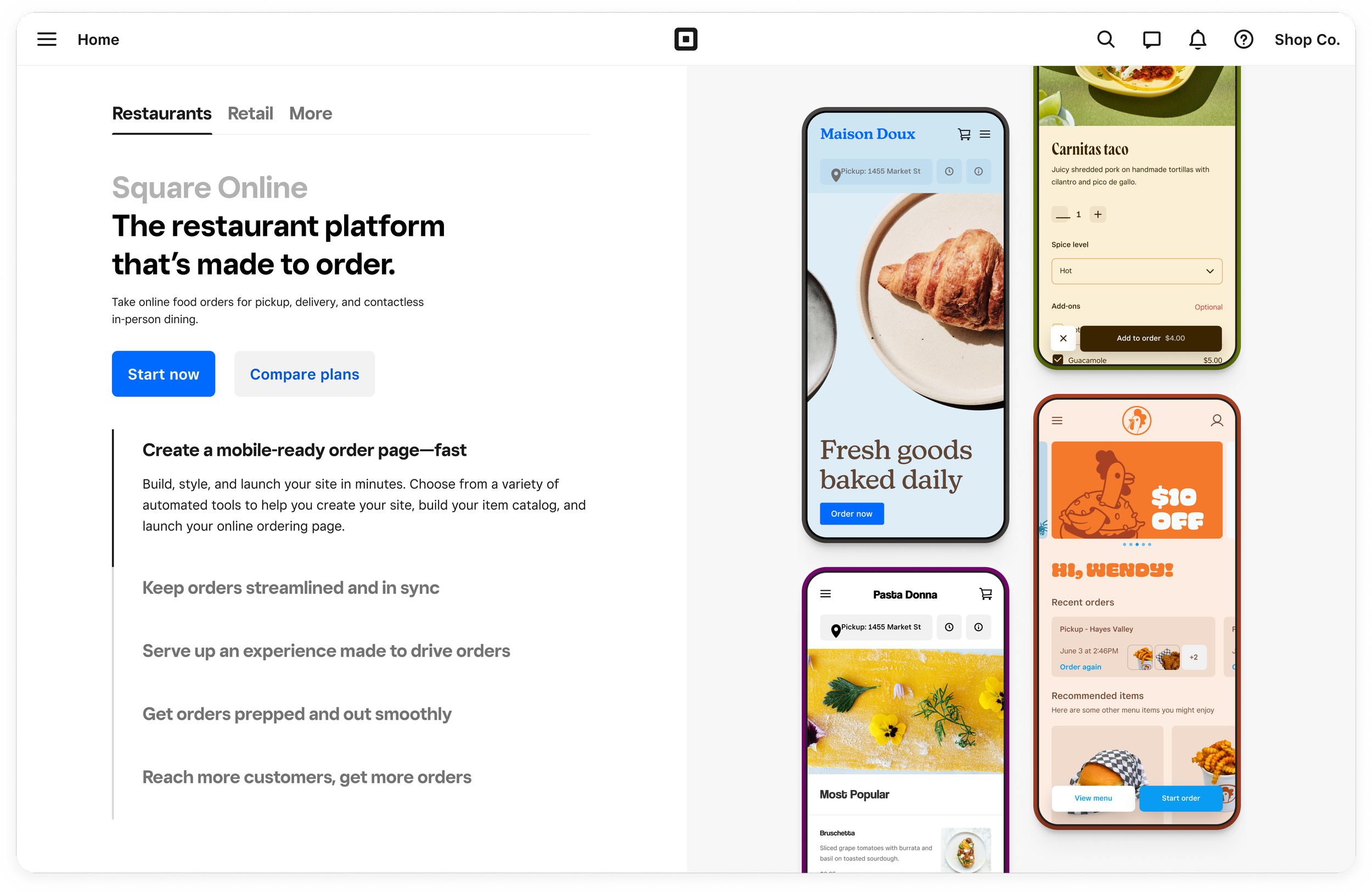
Beyond increasing lifetime value and annual revenue, the goal was to simplify our plans and better align pricing with how customers experience value. This included creating clearer, value-based upgrade paths and standardizing patterns across Square Online.
Role & Scope
Drove the redesign of Square Online pricing and packaging across plan structure, upgrade flows, and system-wide monetization patterns.
Square Online offered four core plans plus a lightly advertised Personal plan, which closely mirrored the Free tier. The plan structure was difficult to understand, and it wasn’t always clear what value sellers gained by upgrading — especially without a transparent path to downgrade later.
Key considerations:
Simplify plan structure and reduce cognitive load
Clarify differentiation across tiers without diluting feature value
Align pricing with demonstrated willingness to pay
Create consistent and predictable upgrade and downgrade paths
Standardize feature visibility across the product

The old pricing plans plus a Personal plan at $6/mo.
Guiding Principles
I led the development of these principles during repricing, and they now guide how the Square Online team approaches pricing and packaging decisions.
Clarity in pricing
Plan structure and billing are simple, predictable, and easy to understand.
Value first
Sellers see what they gain through contextual previews and clear feature differentiation.
Seamless plan changes
Upgrades and downgrades preserve core business continuity and reduce friction.
Aligning Packaging and Plan Transitions
We started by auditing how features were allocated across plans. I partnered closely with cross-functional stakeholders to redefining packaging structure to better align price with product value and clarify differentiation between tiers.
In parallel, I led design and strategy for upgrade and downgrade workflows across Square Online. The goal was to make plan transitions cohesive, consistent, and grounded in value — so pricing structure and in-product experiences worked as one system rather than separate decisions.
The Evolution of Upgrades
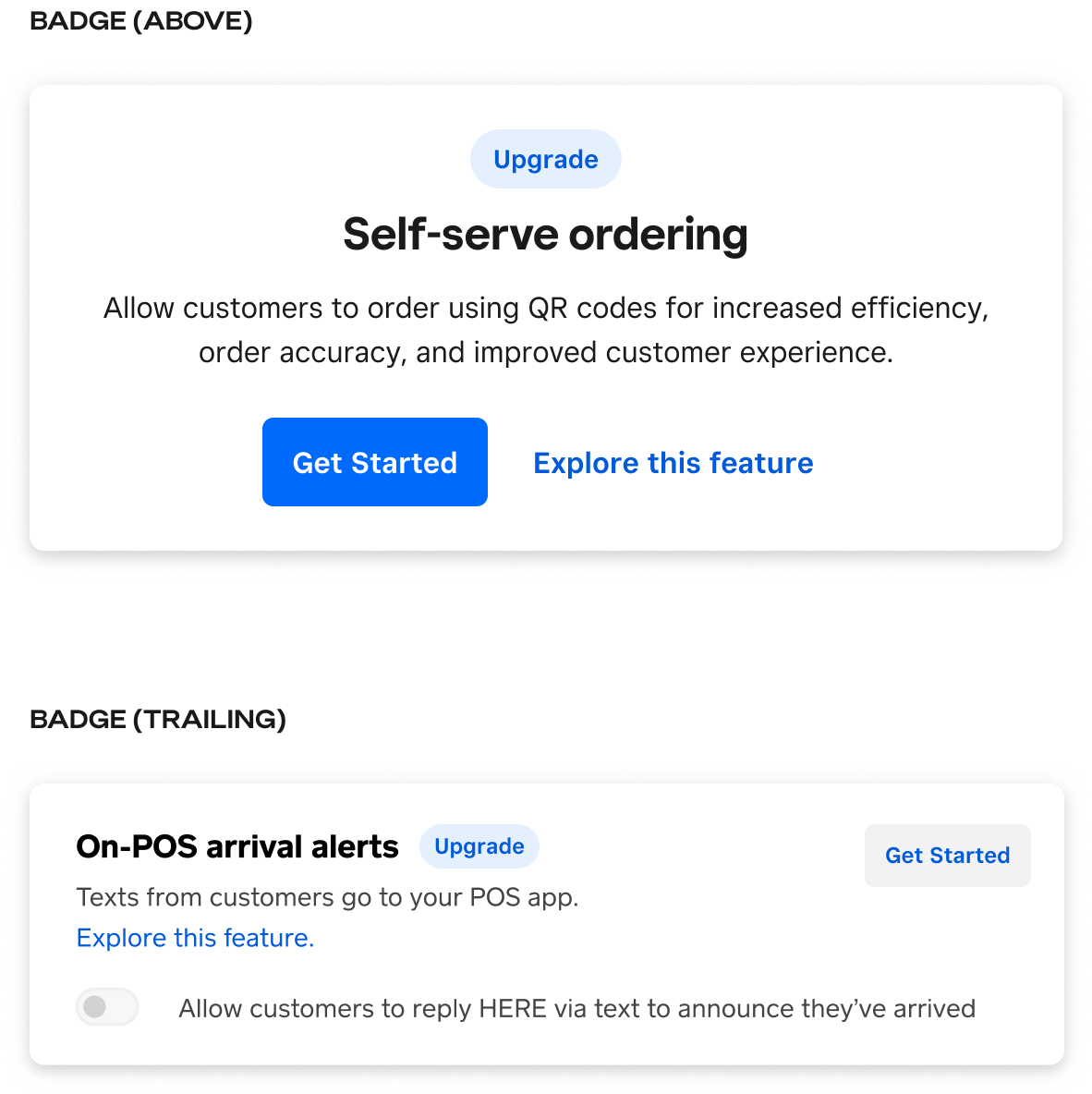
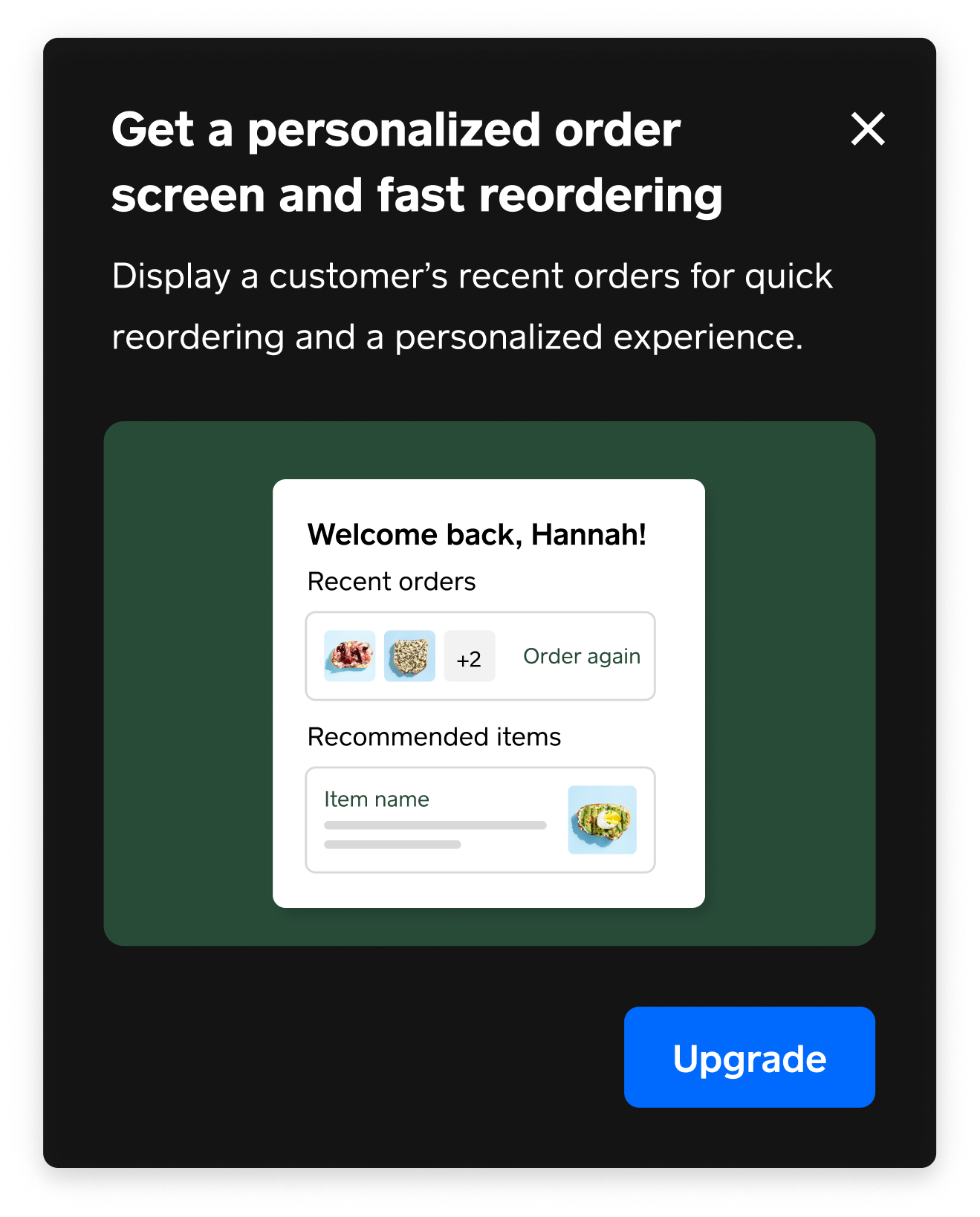
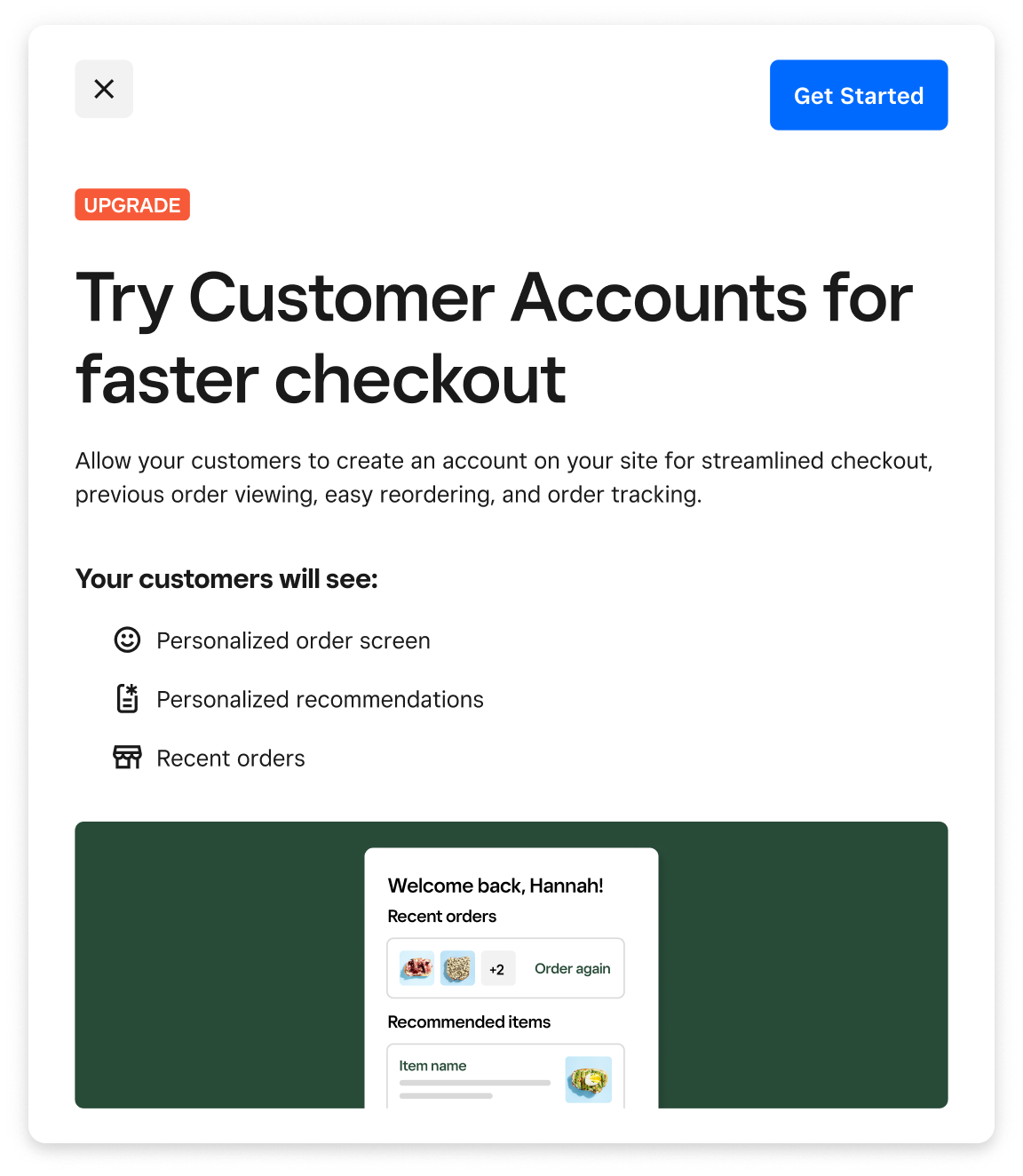
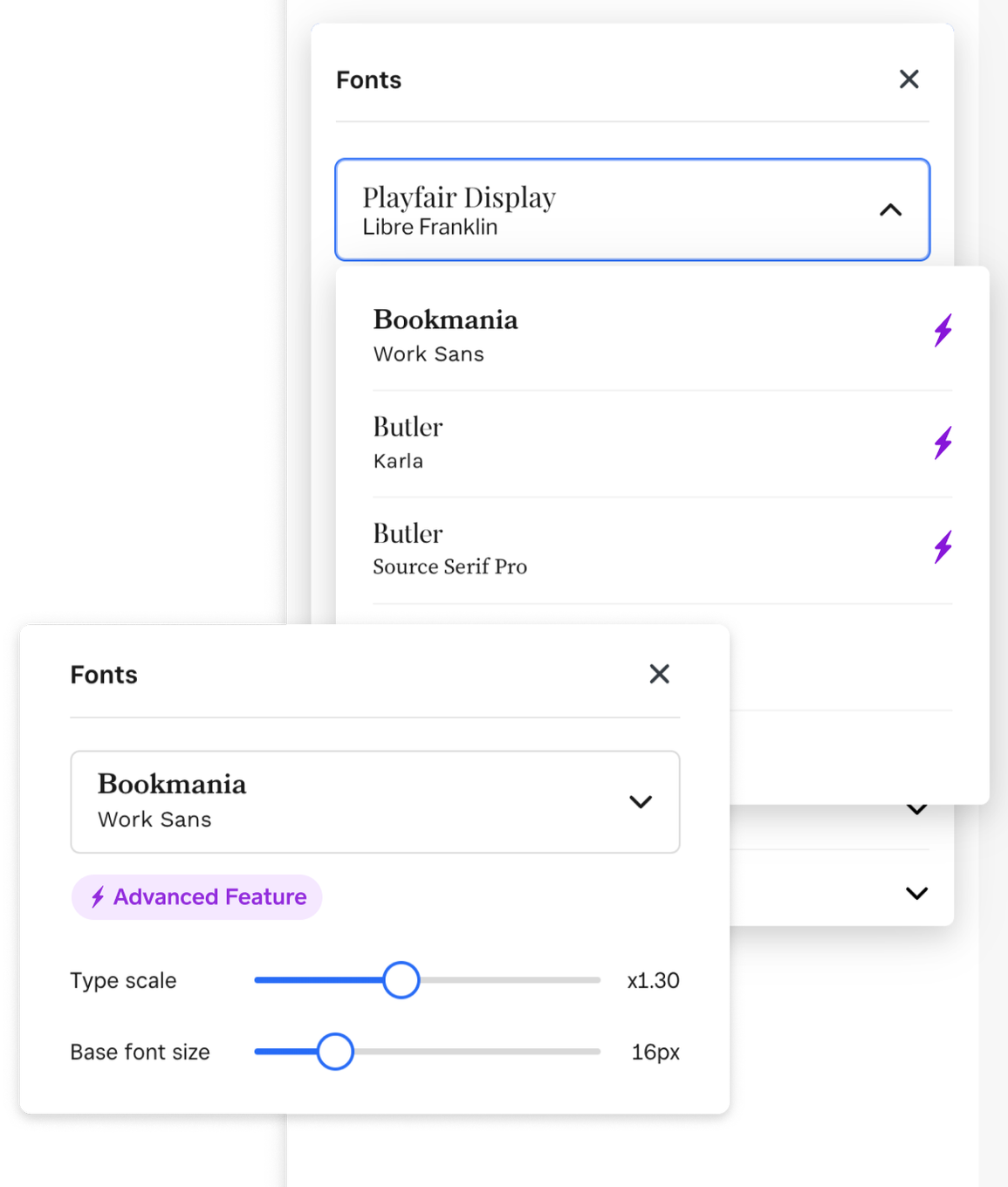
V1 established a consistent upgrade pattern across products. A standardized badge, CTA, and modal replaced fragmented entry points.
Subsequent iterations focused on strengthening value communication. Upgrade surfaces became more contextual, benefits clearer, and feature differentiation sharper — shifting the experience from generic prompts to intentional upgrade moments.

Downgrades
At the time, sellers couldn’t downgrade within the product and often retained paid features after plan changes. There was no clear, self-serve downgrade flow.
The goal was to create a transparent and consistent experience that gave sellers control over subscription changes.
I structured the solution around explicit and implicit downgrade paths, and grouped features by impact — those requiring replacement (e.g., custom domains) and those that could be safely toggled.


Explicit downgrades
When a seller selects a lower-tier plan, the flow clearly outlines what changes. Dynamic modals surface feature loss, timing, and impact.
For example, custom domain users are prompted to choose a subdomain redirect, while other features are re-paywalled with data preserved where possible.
A coordinated in-product and email notification strategy reinforces expectations throughout the transition.
Implicit downgrades
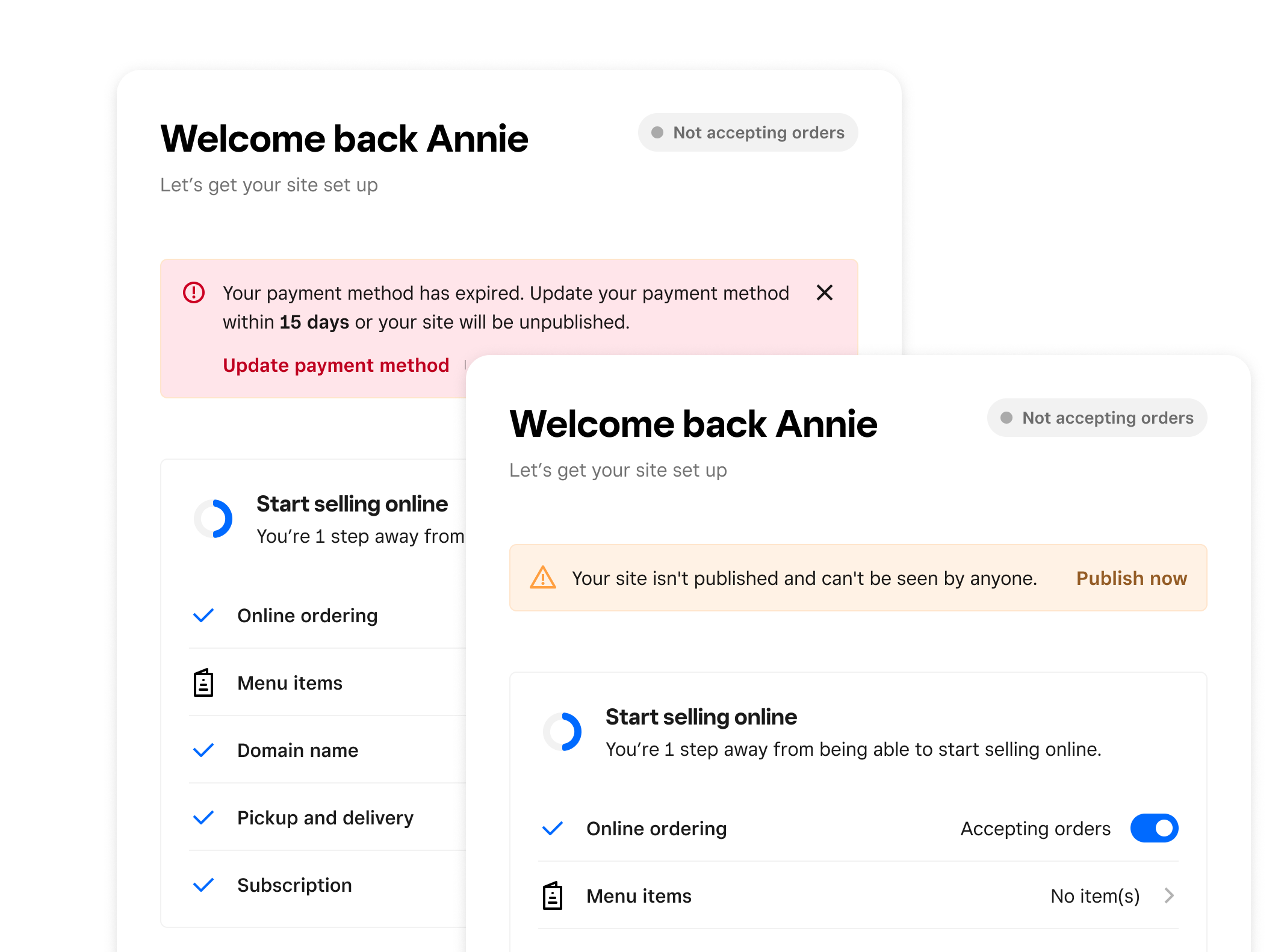
Implicit downgrades happen when no clear intent is expressed — for example, when payment fails or a trial expires.
We implemented a grace period before automatically downgrading the account. Custom domains presented a unique challenge, and after exploring alternatives, we opted to unpublish the site and provide a contextual 404 experience that directs sellers toward resolution.
Results & Next Steps
We’ve launched to 100% of U.S. sellers and are seeing positive conversion impact. International rollout is underway.
Next, we’re iterating on upgrades and downgrades to introduce more contextual value, explore winback moments, and refine upgrade patterns. We’re also investing in stronger data preservation, especially around site design and customizations.